I've been working remotely since 2002. At one point, I managed a team of up to 18 people globally. I had a manager I worked with for six years, and didn't meet in person until year five, but we still managed to stay connected remotely. Remote work done well isn't about being always available. It's about resetting the reflex of reactivity, creating guardrails for your focus, and deliberately leading with connection.
Why It Matters to Stay Connected Remotely
Remote workers tend to work more hours than in-office peers, not because they're more productive but because the transition doesn't exist. No commute, no walk to the bathroom down the hall, no lunch out. And longer hours disguised as engagement eventually show up as burnout. You can optimize all you want, but you need to relentlessly prioritize first. The guardrails that protect your focus and your team's connection don't happen by default. They have to be built.
What You'll Learn
- Why remote workers feel compelled to prove they're working through constant availability and what that pattern costs in microstress, cortisol, and decision-making quality
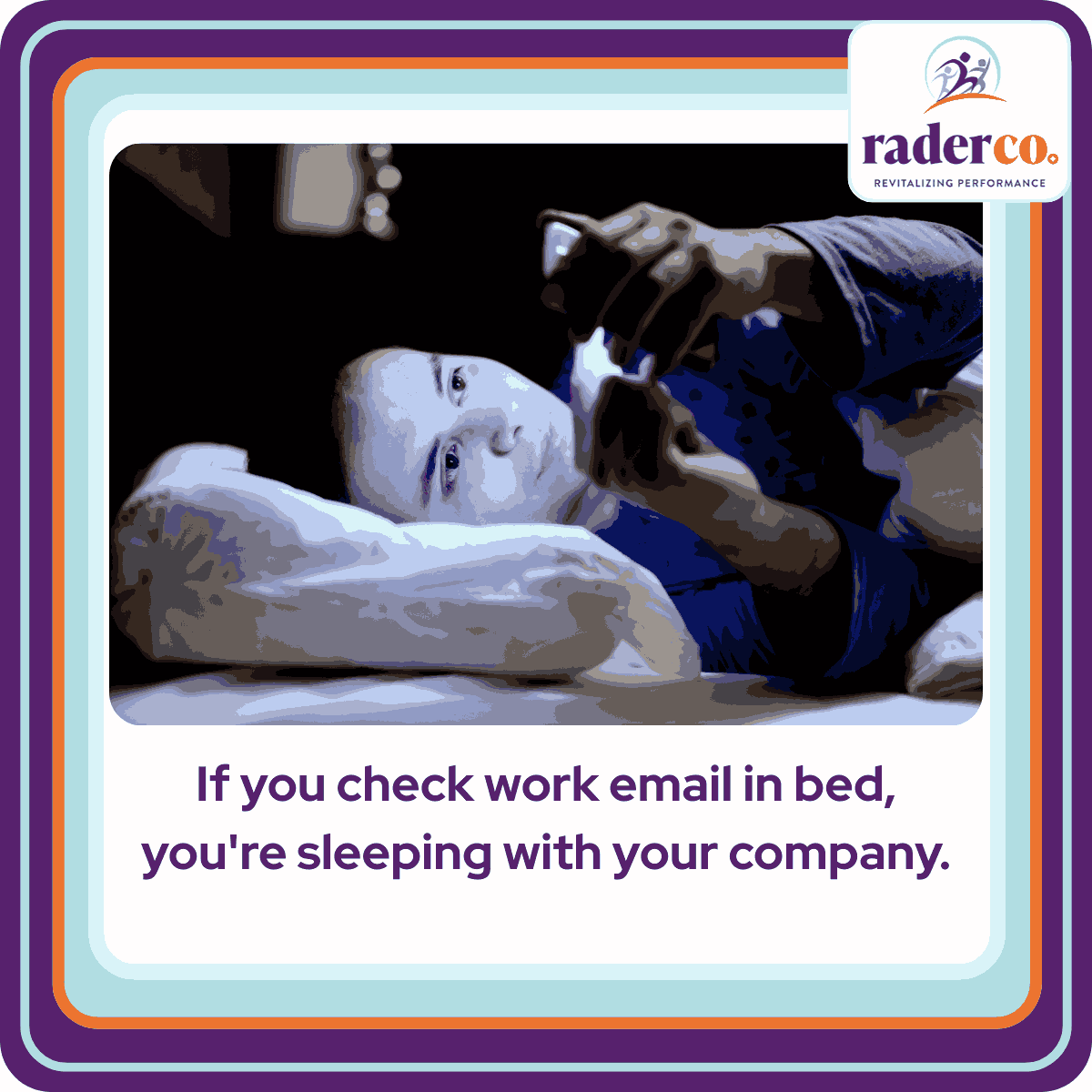
- What it means to sleep with your company and why checking work email in bed is a guardrail worth building now
- How async video tools like Loom replace meetings, reduce rework, and communicate tone in ways that text never can
- How to use a pre-meeting video review to arrive at decisions faster and sometimes skip the meeting entirely
- How short personal video messages build team connection and client relationships in ways that email alone cannot
FAQ
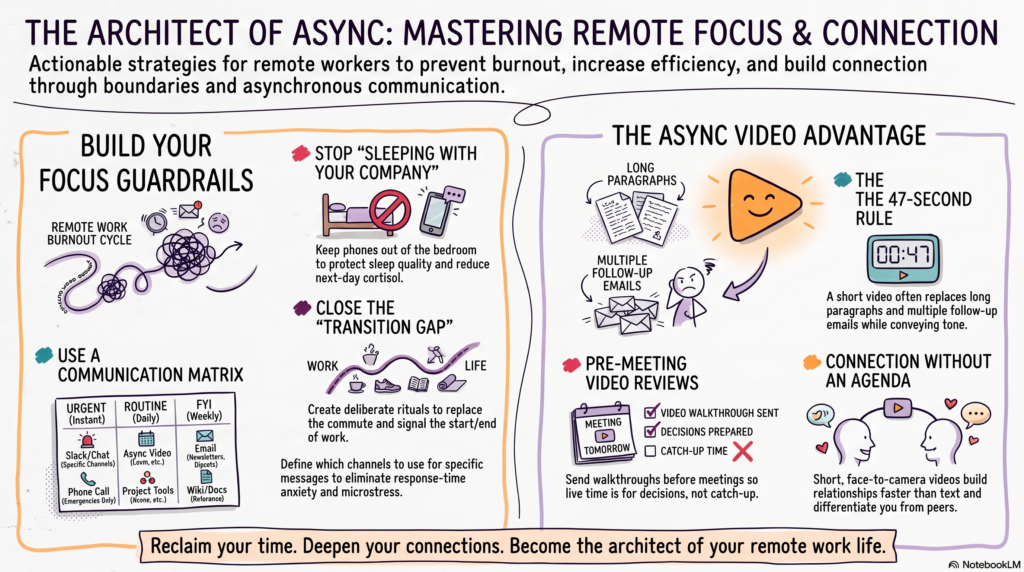
Why do remote workers tend to work longer hours than in-office employees? Because the transition doesn't exist. No commute signals the start or end of the workday. The bathroom is four steps away. Lunch often doesn't happen away from the desk. Without deliberate guardrails, work expands into every available hour. Longer hours reduce recovery, and reduced recovery eventually shows up as burnout, sometimes disguised as engagement until it isn't anymore.
What does it mean to sleep with your company? If you check work email in bed, you're bringing your team, your inbox, and your stress response into the one place your brain needs to associate with rest. It affects sleep quality, cortisol levels, and next-day decision-making. It's one of the highest-leverage guardrails you can build: the phone stays out of the bedroom.
What is async video and when should I use it? Async video is a pre-recorded video of a screen or face sent in place of a meeting or a long written message. Tools like Loom let you record, share, and caption a video in seconds. Use it when tone matters, when visuals need explanation, or when typing everything out would take longer than just showing it. A 47-second video can replace a paragraph of text and three follow-up questions.
How does a pre-meeting video review save time? Send a short video walking through the material before the meeting. Attendees arrive informed; questions are already answered, and the meeting becomes decision time rather than catch-up time. In some cases, the meeting doesn't need to happen at all.
How can I use video to maintain a connection with my team and clients? Short face-to-camera videos sent without an agenda build relationships faster than email. Twenty seconds saying you were thinking of someone, or a quick Loom walking through a proposal, signals care and effort that text doesn't convey. It's also a differentiator: most people don't do it, so those who do are remembered.
What is a communication matrix and how does it reduce ambiguity? A communication matrix defines which channel to use for each message type and the appropriate response time for each. Confusion about where to reach someone and how quickly they'll respond creates microstress and rework. Clear expectations reduce both. The full framework is in Reclaim Your Workday, and a sample is in the free Go-To Guide.
Resources
- Watch the full clip: How to Stay Connected and Productive Working Remotely
- Book: Reclaim Your Workday
- Free Go-To Guide including a sample communication matrix: Reclaim Your Workday Go-To Guide
- Loom Videos Replace Meetings: The 5-Min Habit That Gives 30
- Designing Meetings for Neurodivergent Brains
- Zoom Zombies to Async Advocates: Burn Down Your Meeting Culture and Rebuild It
- Health-Powered Productivity Podcast: available wherever you listen to podcasts
- Twice-monthly Tipsletter: Weekender Snapshot