You handed off the project. You were clear. You might even have said the words “you own this.” Then the questions started. If you want to delegate decisions along with the work, the handoff has to name which calls are theirs. Otherwise, every fork in the road comes back to you.
“Is this the version you want the partner to see?”
“Can I send the review notes back to the client?”
“Quick question before I hit submit.”
Every one of them ends in a question mark and your name.
What is delegation without decision rights?
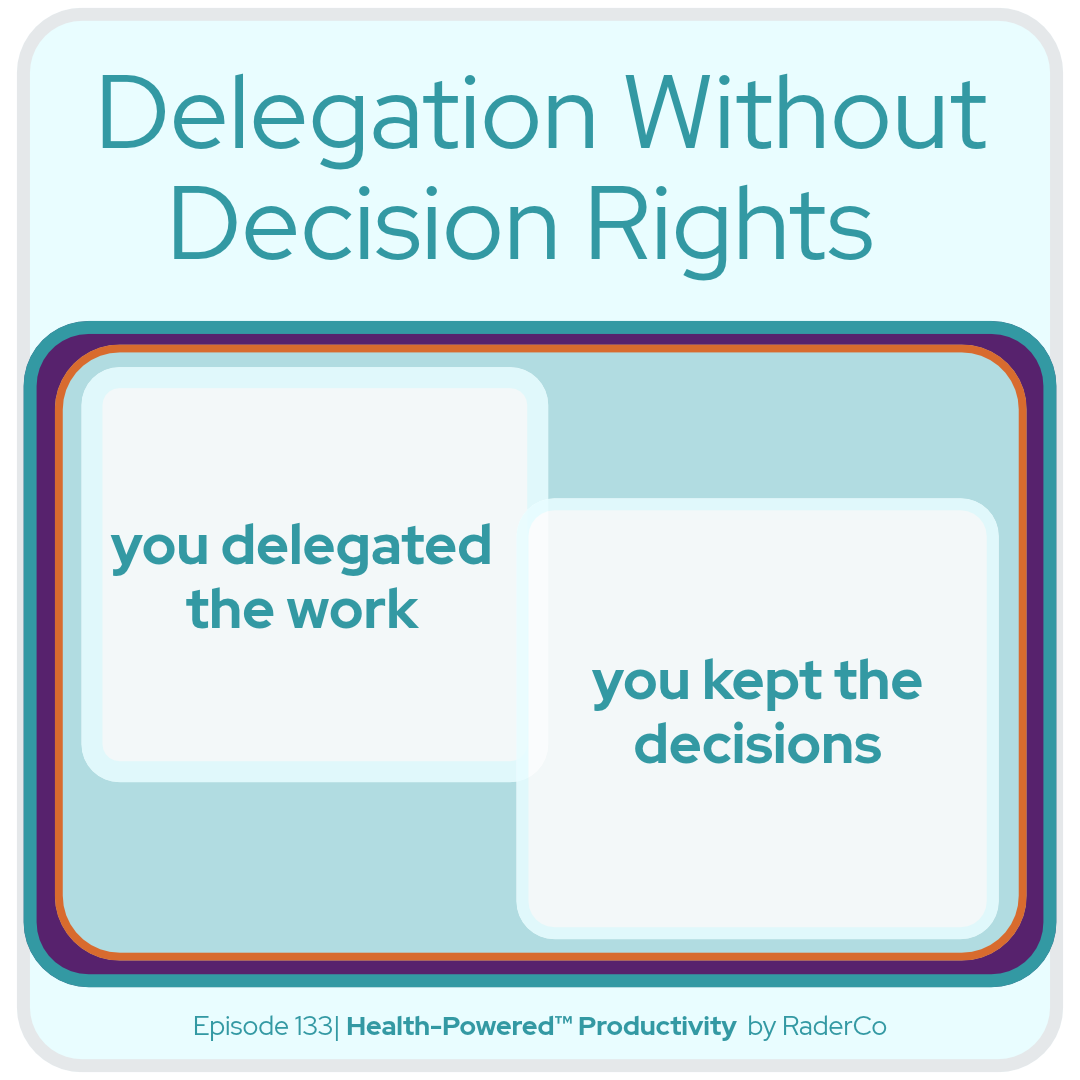
You delegated the work. You kept the decisions.
In Episode 128, I broke down Ability, Capacity, and Agency, the three reasons you can’t get to a priority even when you know exactly what it is. Agency is the permission to prioritize. With it, you set your own agenda. Without it, you can have the skill and the time, and someone or something else still sets it for you.
On your team, that someone might be you.
Your people have the ability. You hired them for it. You’re handing them ownership, so they have the capacity, or you’re expecting them to make room by pausing or dropping something else. What they don’t have is permission to make the call. So they do the reasonable thing and ask you. Every time.
How do you know you’re the bottleneck?
In The Right Things First, the first filter question is: what’s the real bottleneck? Sometimes the honest answer is the person holding the pen.
Then we solve around it. We reply faster. We add a check-in. We ask for another headcount, because the team is obviously stretched. I call it solving around the problem instead of solving the problem. Faster replies train your team to wait for faster replies.
Here’s the tell. You take a day off, and decisions sit there waiting for you, because you’re the only one allowed to make them. If the work stops when your phone does, you're the bottleneck.
I worked with a director who attended most of the meetings his direct reports “owned.” After a consulting and training stint with his team, he realized he was talking over them, giving his opinion first, and taking the meetings back. In two recurring meetings, a couple of people in the room didn’t even know who was running them. (It wasn’t him.)
He caught it himself. Recognizing yourself as the bottleneck takes more courage than most people give it credit for.
I know this is hard. I’m onboarding a new Operations Coordinator right now. As we go, I’ll decide what she owns and what she doesn’t. For now, I’m giving her things she can’t break, so she builds confidence with every task I hand her.
How do you delegate decisions? Three moves
Set the check-in date. Put the next look on the calendar. If they know you’re reviewing it on the fifteenth, they don’t need to ping you on the ninth, and you don’t need to hover. Asking about a task before its deadline can create anxiety: Did the deadline move? Do they not trust me? That’s what your one-to-ones are for.
Name the decision. “Own the client update” is a task. “You decide when it’s ready to send, and you don’t need me to see it first” is a decision. Say which calls are theirs, be clear, and write it down where they’ll find it later. If you can’t name the decision, you haven’t delegated it.
Watch it back once. Let them make the call. Then look at how they made it, once, together, after it’s done. Then stop looking. One review builds trust. Reviewing every one is approval with extra steps.

What if they keep asking?
They will, at first. Asking you has been safe for a long time. When a question comes in that’s theirs to decide, hand it back: “That’s your call. What did you decide?”
And at some point, for the love of kittens, stop copying them on everything. Some things, sure. Most things, no. Being copied on everything tells them you still don’t trust them, and you don’t need that clutter in your inbox.
One Thing You Can Do Now
Open this week’s chat and email from your team. Count the messages asking your permission for a call you’d be fine with them making. Pick one, and tell that person the decision is theirs from now on.
You can build agency, but first you have to name it. As the leader, you name it for them, one decision at a time.
Frequently Asked Questions
What does it mean to delegate decisions?
Delegating a decision means telling someone which call is theirs to make without checking with you first. If you hand over the task and keep the decision, you’re still the approval step, and the work still waits on you.
What is delegation without decision rights?
It’s handing someone the work while keeping the decisions. They have the skill and the time but not the permission to make the call, so every question routes back to the leader.
How do I stop being the bottleneck on my team?
Name which decisions are theirs, review how they made one of them once, and set a date for the next check-in. When a question comes in that’s theirs to decide, hand it back and ask what they decided.
Should my team copy me on every email?
Some things, sure, but most things, no. Being copied on everything tells your team you still don’t trust them, and it fills your inbox with calls that aren’t yours anymore.