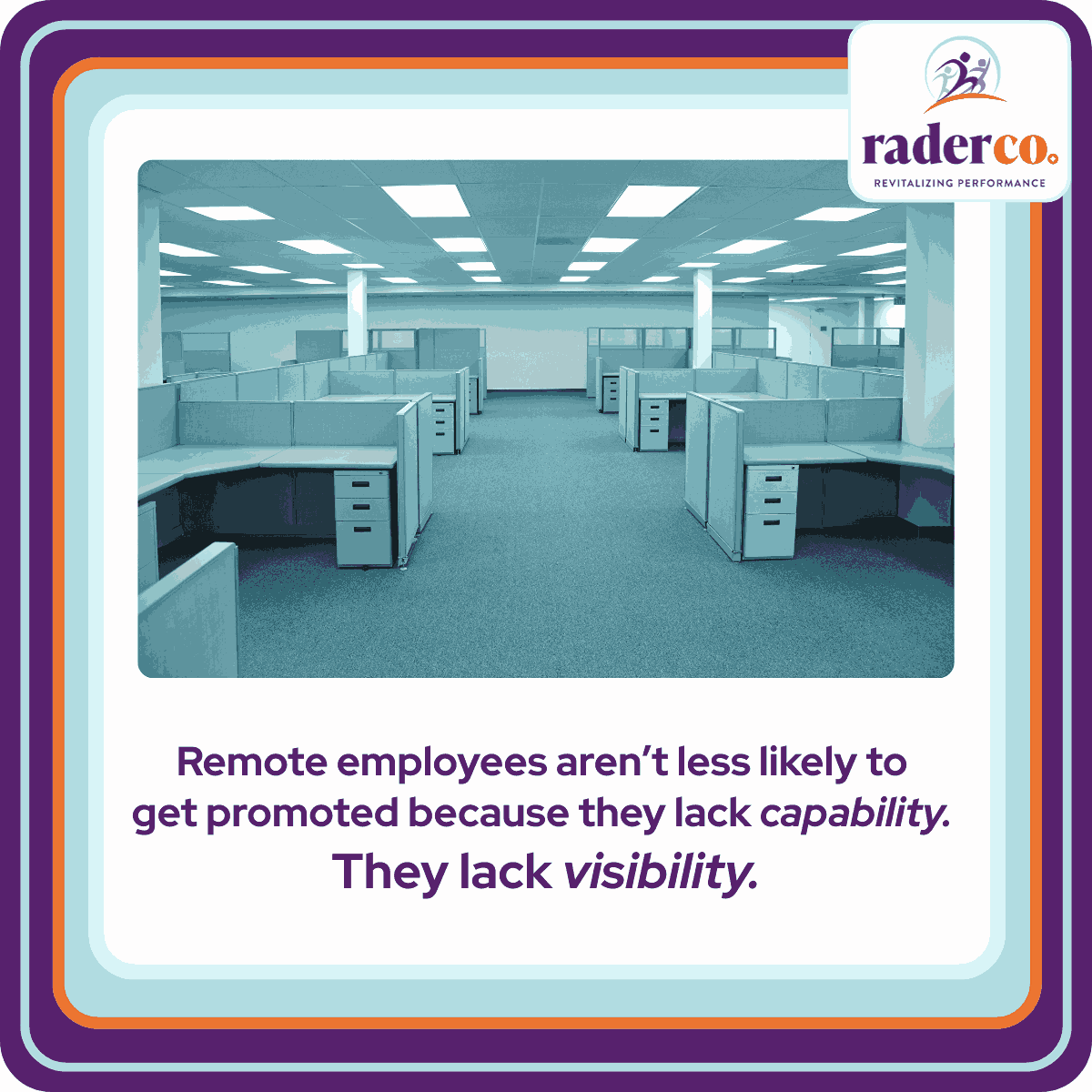
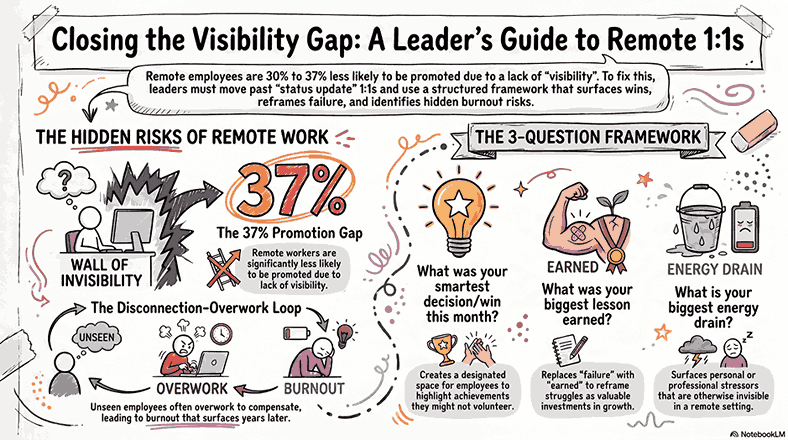
Remote employees are less likely to get promoted than their in-office peers. Not because they're less capable. Because they're less visible. And when visibility is the gap, better remote one-on-one questions are one of the most powerful tools a leader has to close it.
Why It Matters
Most one-on-ones default to status updates. What are you working on....any blockers...see you next week.
That format does not build the kind of relationship that keeps remote employees visible, recognized, and retained. And yes, having regular one-on-ones is an important baseline. But the questions you ask inside that meeting determine whether it's a check-in or a real conversation. When a team feels disconnected, they often resort to overwork. Overwork reduces recovery, not just physical recovery but cognitive recovery. That pattern doesn't show up tomorrow. It shows up a year or two from now, and it doesn't just go away.
What You'll Learn
- Why fully remote employees are less likely to get promoted and what a structured one-on-one template does to counteract that
- How asking "what was your smartest decision this month" creates a consistent space for wins that women, especially, are less likely to volunteer without being asked
- Why "biggest lesson earned" is more useful language than "biggest failure" and what that distinction does for psychological safety
- Asking about energy drains surfaces what's actually affecting performance, including things happening at home that remote employees would never think to raise
- Why team-level sharing of wins and lessons compounds the individual benefit and builds collective learning
FAQ
Why are remote employees less likely to get promoted? Research puts the gap at 30 to 37 percent, depending on the study. The most common reason is visibility. If decision-makers don't have a strong relationship with someone, it's easier to overlook them when opportunities come up. Structured one-on-ones are one of the most direct ways to close that gap.
What questions should I be asking in a remote one-on-one? At minimum, three: what was your smartest decision or biggest win this month, what was your biggest lesson earned, and what's your biggest energy drain right now? These can be used in any combination and work equally well for weekly check-ins or quarterly reviews.
Why "lesson earned" instead of "lesson learned"? Because earned implies you got something out of it. It reframes struggle as investment rather than failure. That language shift changes how people engage with the question and what they're willing to share.
What if someone's energy drain has nothing to do with work? That's the point. Remote employees are less likely to surface personal stressors because there's no natural moment to do so. A sick dog, a kitchen renovation, a kid who's been home for a week. These things affect performance whether or not anyone names them. Asking the question creates permission to name them.
How does disconnection lead to overwork? When people feel unseen or uncertain about their standing, they compensate by working more. More hours, more output, more visible effort. That pattern reduces cognitive recovery over time. It doesn't show up immediately. It shows up as burnout, disengagement, or turnover a year or two later.
Can these questions work at the team level too? Yes. One person shares their smartest decision at a team meeting. Another shares their lesson earned. The format scales and the learning compounds. Teams that do this regularly build shared knowledge faster and feel more connected to each other's work.
Resources
- Watch the full clip: Better Remote 1:1s: Questions Every Team Leader Should Ask
- Book: Reclaim Your Workday
- Health-Powered Productivity Podcast: available wherever you listen to podcasts
- Powered Path Program goal-achievement course
- Weekly tips: Weekender Snapshot