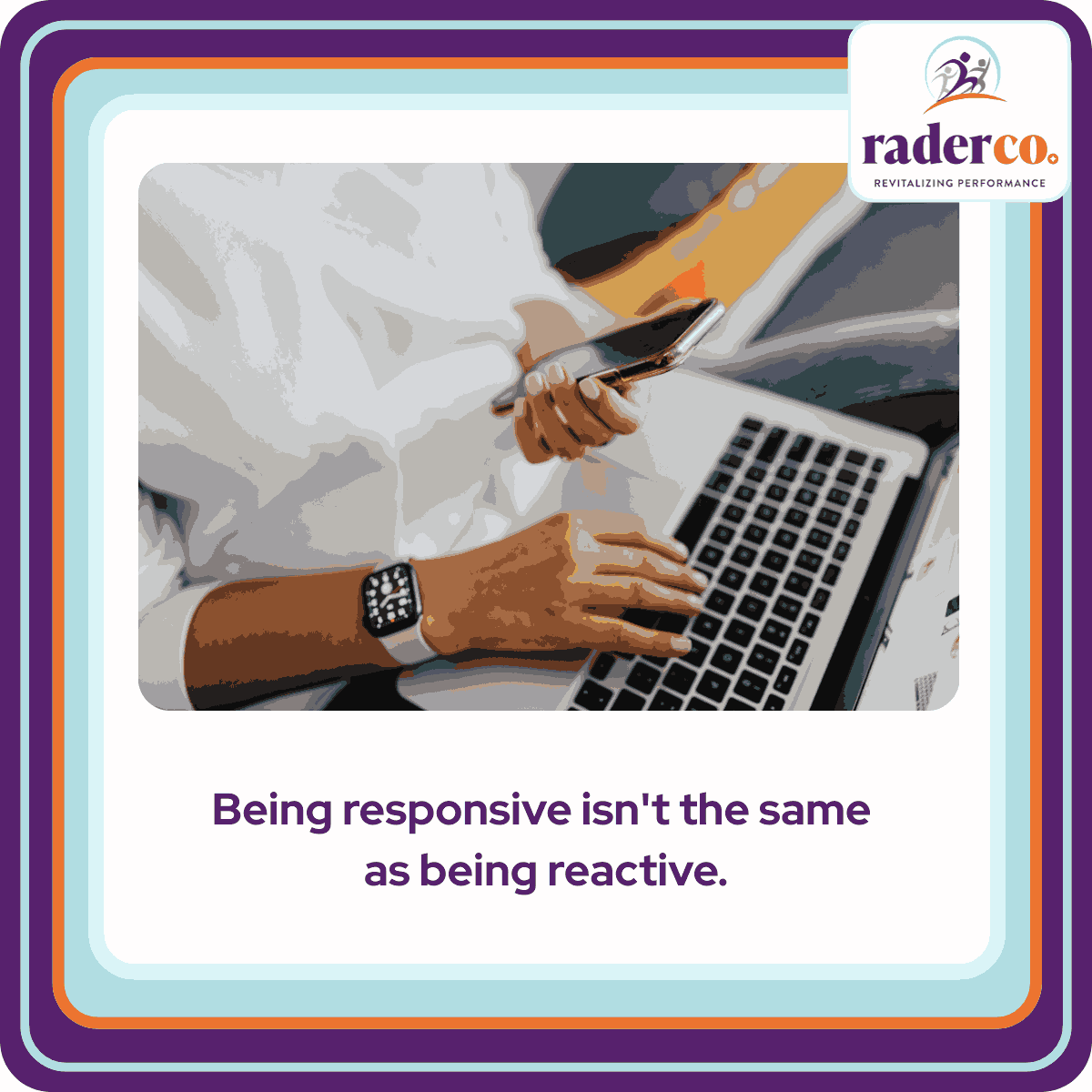
Being responsive isn't the same as being reactive. Most people know this intellectually and ignore it in practice. Every time you treat your inbox or your Teams like a live chat with no acceptable delay, you're not demonstrating availability. You're training your team, your brain, and your nervous system into a pattern that accumulates costs over time: micro-stress, elevated cortisol, compromised decision-making, and zero cognitive recovery. Here's how to stop being reactive at work.
Why It Matters
The pressure to respond immediately is especially acute for remote workers. There's a name for it: the productivity paradox. When you can't be seen at your desk, you prove you're working by staying visibly available. And yes, being responsive and setting clear communication expectations are things worth doing. But the reflex of reactivity is different from intentional responsiveness, and the gap between them has measurable consequences for your health, your team's growth, and the quality of your decisions.
What You'll Learn
- What the productivity paradox is and why remote workers feel compelled to respond instantly, even when it works against them
- Why instant replies can actually disempower your team and steal opportunities for their professional growth
- How micro stress accumulates under constant urgency and what it does to your blood pressure, sleep, cortisol levels, and decision-making over time
- Why cognitive recovery between tasks isn't optional and when your best thinking actually happens
- How a communication matrix can help your team reach you in the right way for the right kind of question
FAQ
What is the productivity paradox? It's the pressure remote workers feel to respond immediately to prove they're working. In an office, nobody thinks twice about a ten-minute bathroom break or a lunch out. Remotely, the same gap feels like a liability. That pressure drives reactive behavior, increasing stress and reducing the quality of your work.
What's the difference between being reactive and being responsive? Reactive means you answer the moment something arrives, regardless of what you're in the middle of. Responsive means you answer within a defined, reasonable window. Siri responds immediately. High performers don't need to.
How does instant replying disempower my team? When you step in to solve a problem the moment someone raises it, you're signaling that you don't trust them to handle it. If you tell someone you're unavailable and then respond anyway, you've undermined the delegation. Sometimes waiting to respond is the most developmental thing you can do.
What is micro stress and why does it matter? Micro stress is the accumulation of small, constant signals of urgency throughout the day. Individually, they feel manageable. Collectively, they raise cortisol levels, disrupt sleep, affect blood pressure, and compromise decision-making. It doesn't show up as a single breakdown. It shows up as chronic, low-grade depletion.
What is cognitive recovery and when does it happen? Cognitive recovery is the mental rest your brain needs between tasks to make better decisions. It doesn't happen between emails. It happens on a walk, in the shower, at breakfast. Building space for it is not a luxury. It's a performance requirement.
What is a communication matrix and where can I learn more? A communication matrix is a framework that defines which channel to use for which type of message, and what response time is appropriate for each. It reduces the pressure to be everywhere at once and gives your team clear expectations. The full framework is in Reclaim Your Workday and a sample copy is linked to in the free Go-To Guide.
Resources
- Watch the full clip: Stop Being Reactive at Work: Why Instant Replies Are Costing You More Than You Think
- Book: Reclaim Your Workday
- Free Go-To Guide including a sample communication matrix: Reclaim Your Workday Go-To Guide
- Health-Powered Productivity Podcast: available wherever you listen to podcasts
- Weekly tips: Weekender Snapshot