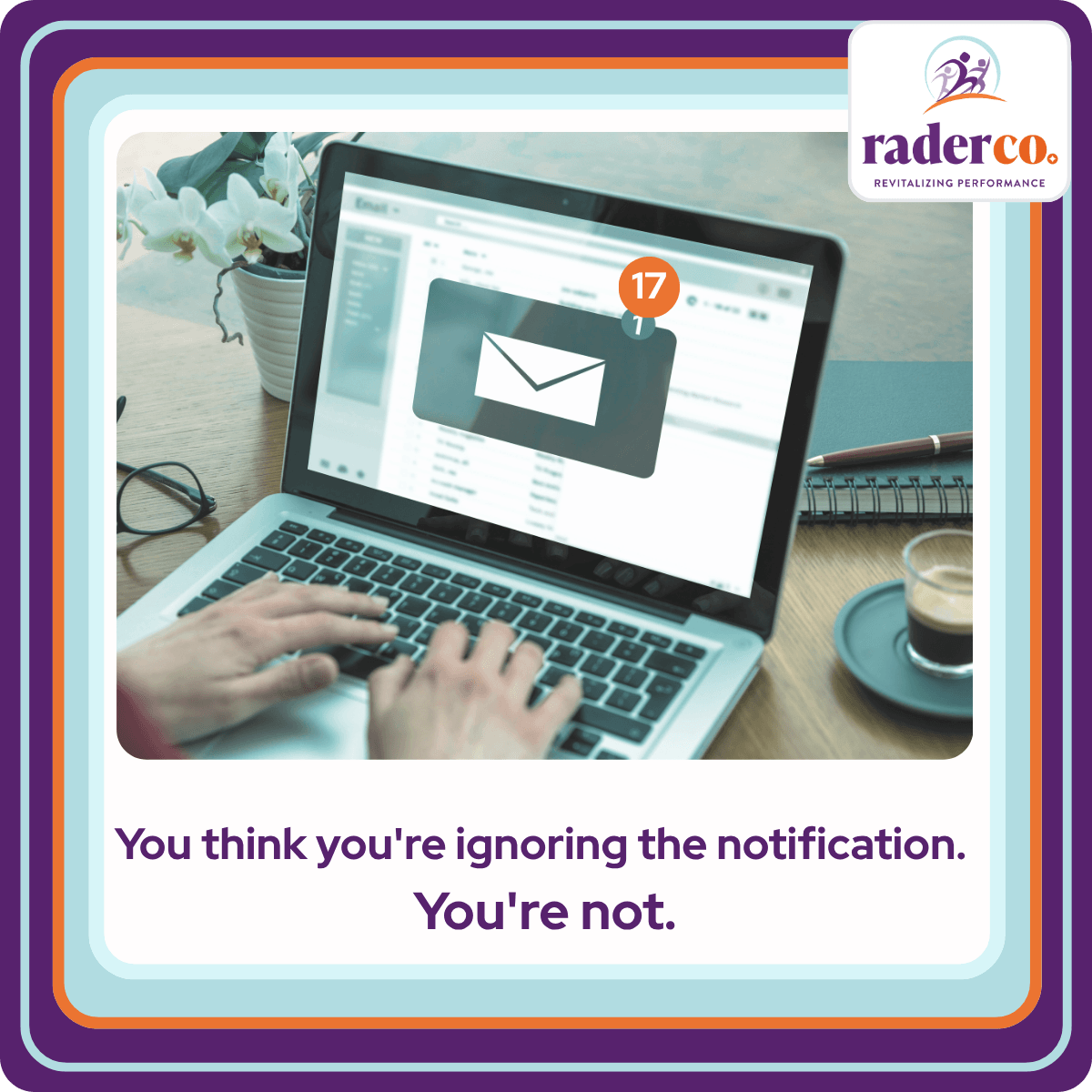
You're not distracted because you lack discipline. Even smart people still struggle to focus at work. Every ring, ping, buzz, and haptic you receive triggers the involuntary part of your brain. The same part wired to respond to sirens, flashing lights, and babies crying. Your brain has not caught up in 30 years to the fact that a Slack or Teams notification is not a survival threat. Understanding what is actually happening is where better focus begins.
Why It Matters
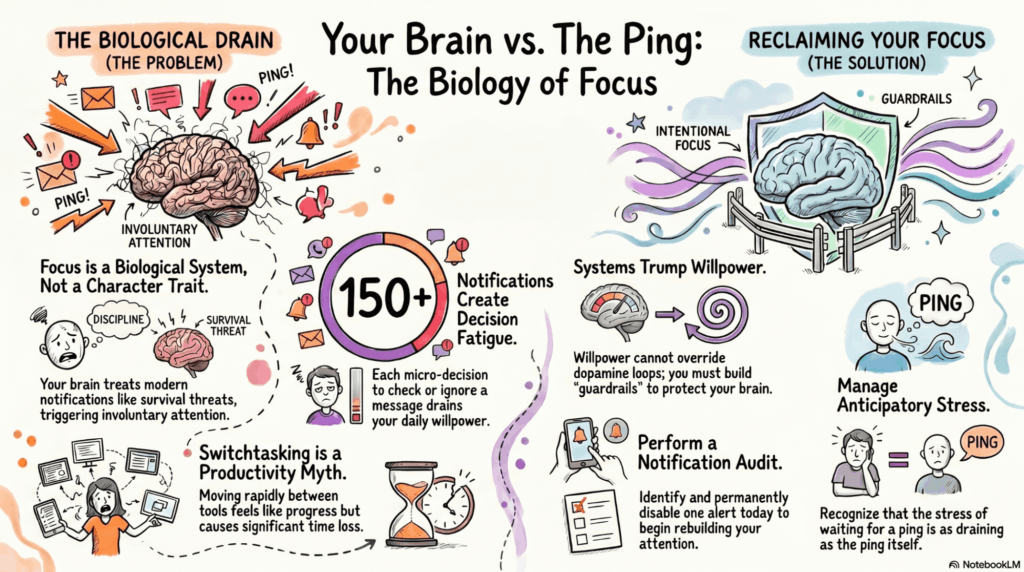
Most focus advice skips the biology. It suggests trying harder, batching your email, or putting your phone in another room. And yes, I talk about doing these things as optimization strategies. None of that sticks if you don't understand what you are working against. Decision fatigue, anticipatory stress, and switchtasking are not productivity buzzwords. They are measurable drains on your performance, your willpower, and your ability to do your best work by the end of the day.
What You'll Learn
- Why every notification is a micro decision, even when you think you're ignoring it, and how 150 emails and chat messages a day add up to serious decision fatigue
- What anticipatory stress is, why your brain starts craving the dopamine hit before the notification even arrives, and how it affects the people around you
- The difference between background tasking, hypertasking, and switchtasking, and why switchtasking is the one most of us are doing most of the time
- Why multitasking is a myth and what the research actually says about how much time you lose in every task switch
- How decision fatigue follows you home and affects everything from your client work to what you eat for dinner
FAQ
Why do smart, high-performing people still struggle with focus? Because focus is not a character trait. It is a biological system being worked against by tools designed to trigger your involuntary attention. Willpower alone does not override a dopamine loop.
What is decision fatigue and why does it matter at work? Decision fatigue is the cumulative drain that comes from the volume and complexity of decisions you make throughout the day. The more decisions you make, the worse your brain gets at making them. It affects your judgment, your willpower, and your ability to prioritize what actually matters.
What is the difference between multitasking and switchtasking? Multitasking is an umbrella term. Switchtasking is what most of us are actually doing: moving back and forth between email, Slack, Teams, and other tools fast enough that it feels like progress. It is not. The brain loses time in every switch and nothing ever feels finished.
What is anticipatory stress? Anticipatory stress is the stress of waiting for a notification, not just receiving one. Your brain starts producing a dopamine response in anticipation of the ping. Over time, it wants more of it. Your family experiences anticipatory stress, too, every time they wonder whether your phone is about to pull you away.
Are these attention and focus problems my fault? No. These tools are designed to make you want to use them more. The compulsions are built in. Knowing that does not fix the problem, but it is the right starting point for building guardrails that actually work.
What is one thing I can do today to protect my focus? Audit your notifications. Identify one alert you could turn off permanently that you would not actually miss. Start there. Focus is not rebuilt all at once.
Resources
- Watch the full clip: Why Smart People Still Struggle to Focus at Work
- Book: Reclaim Your Workday
- Health-Powered Productivity Podcast: available wherever you listen to podcasts
- Weekly tips: Weekender Snapshot