A practical checklist for presentation skills to right-size content, run clean virtual setups, and land decisions without turning your deck into a document.
Podcast Summary:
Professionals present to inform, align, and decide. That demands clarity, not theater. Start with your audience and use Minimum Viable Detail: the least amount of context needed for the decision, with deeper data ready in hidden slides.
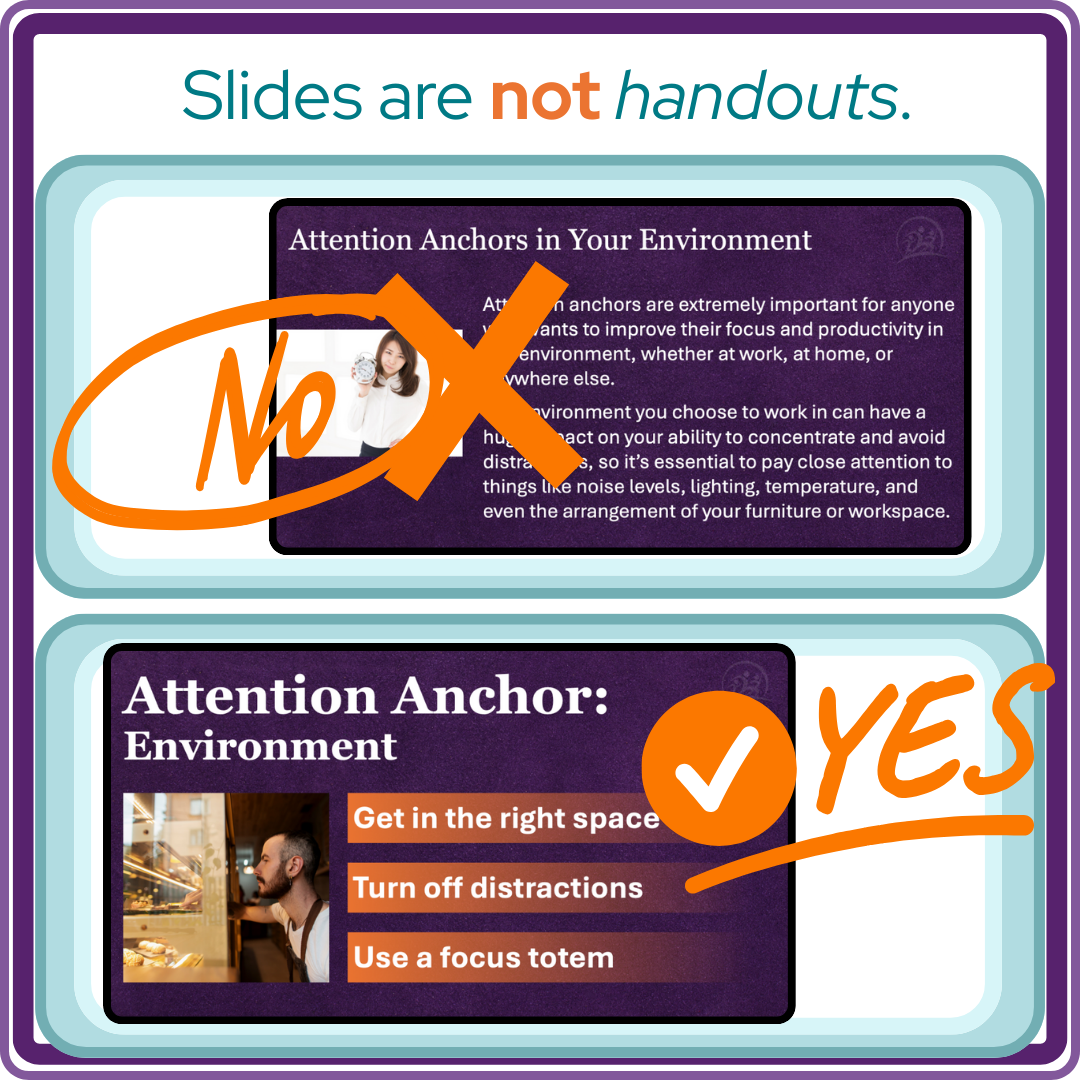
Do you even need a deck? If you do, design for listening with a short headline, one visual, and a minimum font size of 38 points. Treat slides as visuals and create a separate handout.
For Zoom or Teams, put your camera at eye height, light your face, consider your background, stand if possible, and narrate your gaze when checking chat. In person, place the screen beside you, not behind you, and park deep dives for the end.
Engage on purpose with one targeted prompt and time-boxed Q&A.
Right-size the polish and outsource nonconfidential design when the ROI makes sense. Close with a decision, owners, and dates.
Busywork creating slides is not a strategy. Clear communication is.
Why it matters
- Meetings are expensive. Clarity shortens cycles and reduces rework.
- Split attention and wordy slides reduce comprehension and buy-in.
What you’ll learn
- How to tailor depth with Minimum Viable Detail
- Slide rules that favor listening, not reading
- Virtual hygiene that prevents distractions
- In-room presence and prompts that move decisions forward
- Smart outsourcing for design polish
How do I decide how much detail to include?
Use Minimum Viable Detail. Lead with the executive summary. Keep deeper data in hidden slides and reveal on request.
How do I make slides people can listen to?
Short headline, one visual that earns its space, 38-point minimum font. Slides are not handouts.
What virtual setup works every time?
Eye-level camera, front light, distraction-free background, stand if possible, and narrate when you look at chat.
When is design polish worth it?
High-stakes settings, such as board meetings or funding pitches. For routine updates, outsource nonconfidential formatting if the ROI is positive.
How do I close so decisions actually happen?
State the recommendation, assign owners and dates, and send a clear recap.
Related Resources
Episode 106 – Stop Wasting Your Trainings: The Dos and Don'ts for In-Person Learning (16 min)
Episode 107 – Designing Meetings for Neurodivergent Brains Where Everyone Wins (20 min)